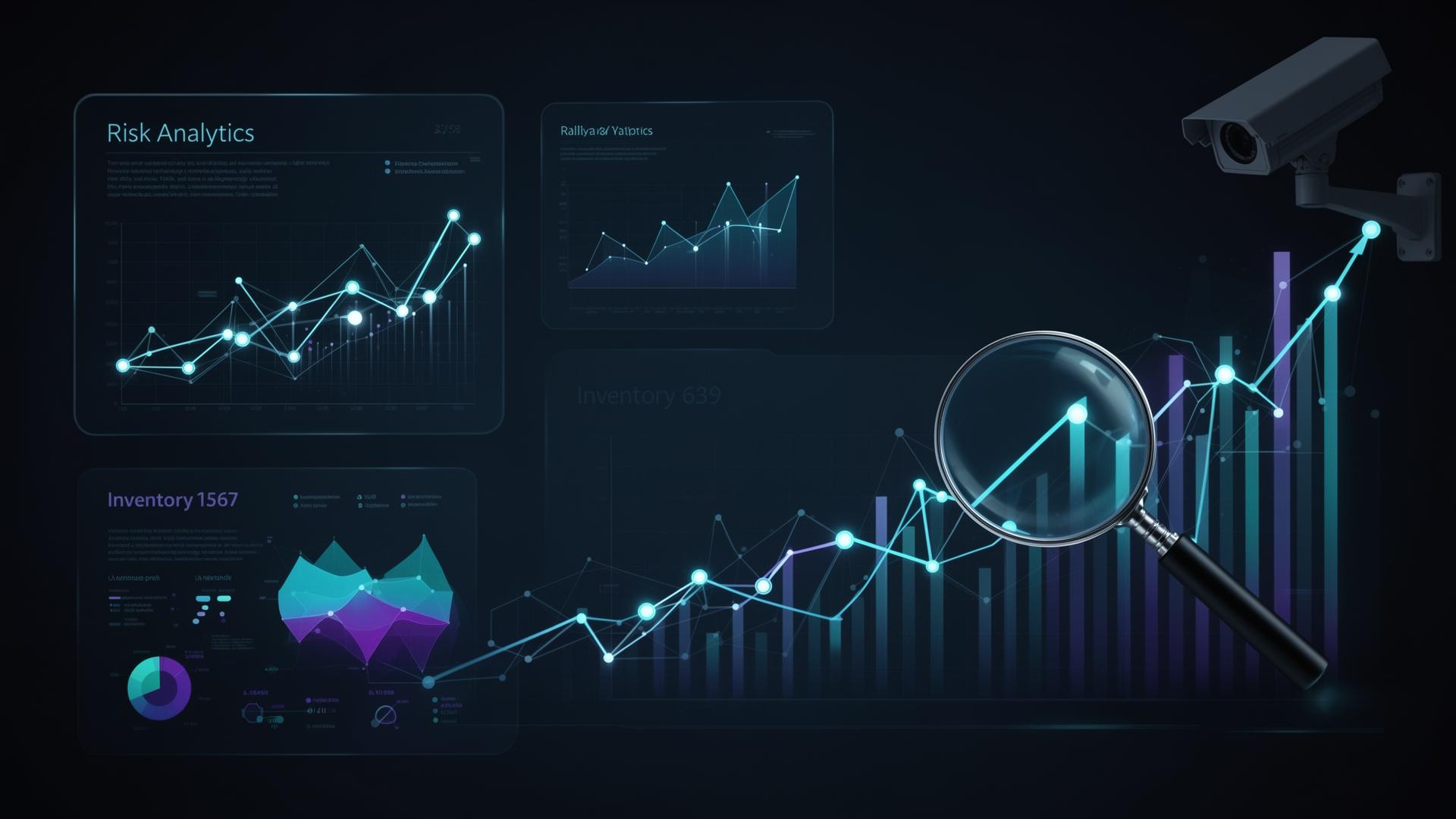
Warning signs almost always exist. Someone has to see them in time.
Most businesses don't discover theft, fraud, operational failures, inventory problems, or accountability issues until after the damage has already been done.
By then, profits have already been lost. Conversations get uncomfortable. Investigations get expensive. And owners are left asking the same painful question:
"How long has this been going on?"
The truth is, the warning signs were almost always there. Slight shortages. A pattern of voids. An audit that kept slipping. A behavior that didn't quite add up. The question isn't whether the signs existed — it's whether anyone connected them in time.
Modern AI changes that equation. Used well, it can read the same data a business already collects and surface the patterns a busy owner could never catch on their own. That's exactly why we built Collin, the AI-powered Loss Prevention Analyst inside My LP Portal.
Most AI Assistants Help You Work Faster. Collin Helps You See What Others Miss.
Most AI assistants are built to make day-to-day work easier:
- Write emails
- Organize schedules
- Generate content
- Answer questions
Useful. But none of that protects your bottom line.
Collin was built for something completely different. He was built to identify risk. He was built to help business owners uncover patterns, vulnerabilities, and threats before they become losses.
Meet Collin
Collin is, all in one:
- An AI-Powered Loss Prevention Analyst
- An Operational Risk Advisor
- A Business Intelligence Assistant
- An Investigative Support Tool
- A Training Companion
- A Trend Analyst
He was designed specifically for small business operations and the loss prevention challenges that come with them — shrink, internal theft, fraud, audit failures, accountability gaps, and the constant pressure of trying to watch everything at once with a small team.
How an AI Assistant Can Identify Theft Risks Before They Cost Your Business Money
Almost every serious loss starts as a quiet pattern. By the time the dollars are obvious, the behavior has usually been happening for weeks or months. Common early indicators include:
- Increasing shortages in a specific category or location
- Unusual transaction activity at certain registers or shifts
- Repeated audit failures in the same areas
- Operational inconsistencies between shifts or locations
- Inventory discrepancies that don't match sales patterns
- Behavioral changes around accountability or oversight
Each one of those signals, by itself, can look like noise. Together, they tell a story. Collin's job is to read that story early — while there's still time to do something about it.
Create your free My LP Portal account and put an AI-powered Loss Prevention Analyst to work on your store, your data, and your blind spots.
What Can Collin Actually Do?
This isn't a chatbot bolted onto a dashboard. Think of Collin as a virtual LP department working quietly in the background — reading what your business is already producing and asking the questions a trained loss prevention professional would ask.
Inventory
Collin can analyze:
- Inventory trends over time
- Shrink indicators across categories and locations
- Recurring shortages tied to specific products
- High-risk merchandise that needs additional controls
- Overall inventory health and accuracy
- Product-specific risk and theft exposure
Till Audits
Collin can review till and register activity to surface:
- Cash shortages
- Cash overages (often as telling as shortages)
- Excessive voids
- Excessive refunds
- Suspicious no-sale activity
- Register accountability issues by employee, shift, or day
Incidents
Across logged incidents, Collin can identify:
- Repeat offenders
- Incident hotspots inside the store
- Recurring theft methods
- Vulnerability analysis on weak fixtures, doors, or processes
- Incident trends by day, time, or category
Employee Risk Indicators
Collin can highlight:
- Repeated discrepancies tied to specific shifts or registers
- Accountability concerns across locations
- Behavioral warning signs documented in coaching or incident logs
- Unusual activity patterns that don't match peers
Collin Watches More Than Your Store
A lot of loss isn't generated inside your four walls. It's driven by what's happening around you — and most small businesses have no practical way to track it. Collin can incorporate context such as:
- Local crime trends
- Organized retail crime (ORC) activity in your area
- Industry-wide theft trends
- Fraud trends affecting similar businesses
- Market conditions that change criminal demand
- Emerging criminal tactics
- Regional theft patterns
Example: A hardware store losing copper fittings
Most owners would investigate the missing inventory — review receipts, recount the bin, talk to associates. Useful, but incomplete.
Collin connects another dot: copper theft is climbing in the region and scrap prices are spiking. Suddenly the "internal mystery" looks a lot more like an external risk pattern. Management can lock down the category, move it behind the counter, and tighten receiving controls before the next wave hits.
Example: A convenience store seeing more refund fraud
Collin notices a regional uptick in counterfeit receipt schemes being shared across stores in the same metro. Instead of treating a single refund as a one-off, the owner trains the team on the method now — and prevents the next five attempts.
Example: A boutique with unexplained shrink
Collin surfaces a known ORC crew working that retail corridor, plus the categories they typically hit. The owner adjusts floor coverage, fixture layout, and opening procedures — proactive protection instead of post-loss paperwork.
Collin Connects the Dots
Most businesses already have:
- Inventory reports
- Audit reports
- Incident reports
- Coaching records
- Training records
The problem isn't a lack of data. The problem is that nobody is reviewing all of it together. The inventory person doesn't see the coaching log. The manager doing audits doesn't see the incident history. The owner sees totals at the end of the month — long after the pattern formed.
Collin reads across those systems. A coaching note about cash handling plus repeated till shortages plus a quiet jump in no-sales on the same shift is no longer three unrelated facts — it's a single, prioritized signal worth a closer look.
Collin Helps Managers Think Like Loss Prevention Professionals
Most small business managers never received formal LP training. That's not their fault — it was never part of the job description. Collin closes that gap by reinforcing how LP professionals think:
- Investigative thinking — ask the next question, not just the first one
- Accountability — who owned the process, the till, the shift?
- Coaching guidance — how to address an issue without burning the relationship
- Incident documentation — capturing the right details the first time
- Operational awareness — noticing what changed, not just what's wrong
- Risk prioritization — focusing on what actually moves the loss number
Collin helps managers ask better questions and make better decisions in real time — without waiting for a regional visit or a corporate LP team they don't have.
Collin Supports the LP Academy
Training is only as good as what people remember when it matters. Inside the LP Academy, Collin acts as an always-available mentor. He can:
- Reinforce lessons after a module is complete
- Answer follow-up questions in plain language
- Explain LP concepts in the context of the user's own business
- Expand on lessons with real-world examples
- Help managers apply what they just learned to a live situation
It's the difference between sitting through training once and actually having a coach on call when an awkward, urgent moment shows up on the floor.
Why Small Businesses Need This
Large retailers protect themselves with:
- Dedicated analysts
- Investigators
- Full LP teams
- Audit departments
- Business intelligence specialists
Most small businesses have none of that. They have an owner, a couple of managers, and a stack of reports nobody has time to cross-reference. The shrink number shows up. The conversation about "where it went" doesn't.
Collin levels the playing field. He gives independent operators the same kind of analytical layer big retailers spend entire departments to maintain — without the headcount, the consulting fees, or the steep learning curve.
More Than an AI Assistant
- • Answer questions
- • Generate content
- • Organize tasks
- • Identifies risk
- • Analyzes trends
- • Reviews incidents
- • Evaluates operational weaknesses
- • Supports investigations
- • Monitors crime trends
- • Reviews audit findings
- • Analyzes inventory patterns
- • Assists managers in real time
- • Reinforces training
- • Helps protect profits
Final Thoughts
Most AI assistants help you work faster. Collin helps you see what others miss.
Because preventing loss isn't about reacting faster. It's about identifying risk before the loss occurs.
Collin wasn't built to replace people. He was built to help people make better decisions — with more context, less guesswork, and a steadier eye on the patterns that quietly drain small businesses every year.
Collin isn't just another AI assistant. He's your virtual Loss Prevention Analyst.
Experience AI-powered loss prevention intelligence designed specifically for small business owners — no credit card required.
21+ years in Loss Prevention, Investigations, and Behavioral Analysis. Hundreds of internal theft investigations and millions of dollars in documented loss prevention and risk reduction across retail and small business operations. Ray built My LP Portal — and Collin — to give independent owners the same kind of analytical protection that large retailers spend entire departments to maintain.
Frequently asked questions
What is a small business AI assistant?+
A small business AI assistant is software that uses artificial intelligence to help owners and managers make better, faster decisions. Most assistants focus on productivity — writing, scheduling, summarizing. Collin, inside My LP Portal, is built for protection: identifying theft risk, operational weaknesses, inventory concerns, and emerging crime trends before they turn into losses.
Can AI help prevent theft?+
Yes. AI cannot stop a person from stealing, but it can surface the warning signs that almost always appear before losses become obvious — recurring shortages, unusual transaction activity, audit failures, behavior changes, and inventory discrepancies. Identifying those signals early gives owners time to act before losses grow.
How does Collin identify risks?+
Collin reviews the inventory, audit, incident, register, and coaching information entered into My LP Portal, compares it against known loss prevention risk indicators, and highlights patterns that may deserve attention — such as repeat offenders, theft hotspots, suspicious refund activity, or weak controls.
Can Collin monitor crime trends?+
Yes. Collin can incorporate context about local crime patterns, organized retail crime activity, fraud schemes, and emerging criminal tactics so business owners can prepare proactively rather than react after the fact.
Can Collin replace a loss prevention manager?+
No. Collin is designed to support people, not replace them. He provides the analytical pattern-recognition layer most small businesses cannot afford to staff full-time. Final decisions, conversations, and any disciplinary or legal action always remain with the business owner.
What makes Collin different from ChatGPT?+
General assistants are built to answer questions and generate content. Collin is built around loss prevention — he understands shrink, till audits, incident patterns, organized retail crime, employee risk indicators, and operational controls, and he applies that context to the data inside your portal.
Related reading
- The Small Business AI Assistant Built to Reduce Theft and Risk
- How AI Is Changing Loss Prevention for Small Businesses
- The 5 Warning Signs of Employee Theft Owners Miss
- Most Employee Theft Starts With Behavior, Not Inventory
- Why Inventory Keeps Disappearing: Causes of Retail Shrink
- Loss Prevention Is Dead. Long Live Intelligent Prevention.
Run all of this inside one place
My LP Portal turns checklists, audits, incidents, and trackers into a single working system — built for small business owners. Free to start.